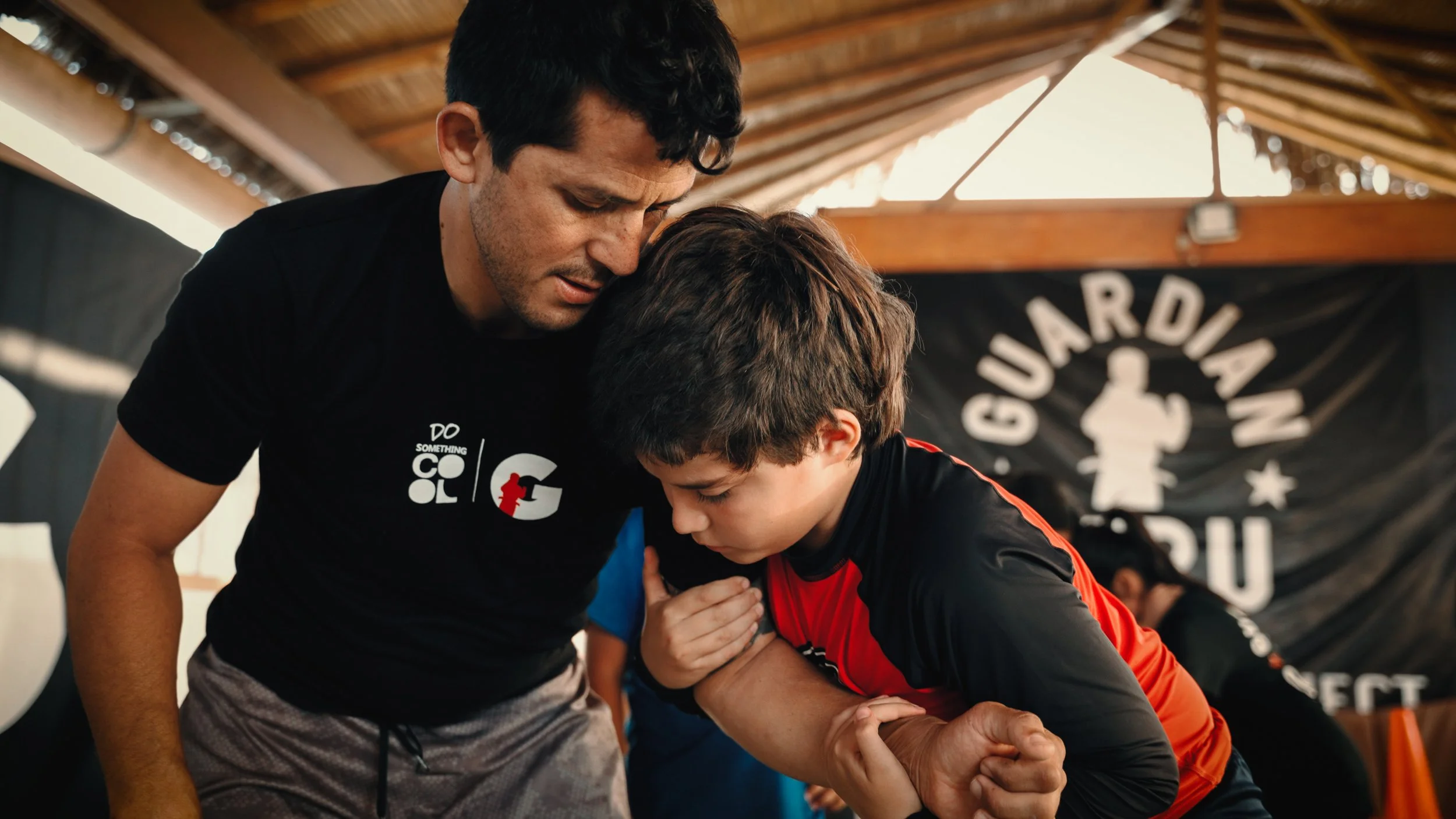
The mat creates a repeatable meeting place
Community programs often struggle with continuity. A jiu-jitsu academy has a useful built-in rhythm: classes happen at known times, students see many of the same peers and adults, and improvement requires returning. That routine can create a dependable point of contact in a young person's week.
The sport also gives coaches a shared task with students. Instruction is concrete—posture, balance, timing, safety—so trust can develop through doing rather than through forced conversation. Mentorship becomes credible when a coach is present repeatedly, follows through and treats every student with dignity.
Belonging needs standards
A strong room is welcoming without being vague. Students should know how partners are chosen, how taps are respected, how conflicts are handled and who to speak with if something feels wrong. Safeguarding is not a page added for donors; it is the operational structure that lets young people train with confidence.
Visitors have a role here too. Skilled guests can contribute technique and attention, but the local coach controls the room. Short-term enthusiasm should never override class plans, consent rules or the privacy of minors.
- Consistent coach attendance and clear responsibility for each class.
- Written safeguarding and photography practices understood by visitors.
- Safe equipment, clean facilities and age-appropriate instruction.
- A defined way for parents and students to raise concerns.
Measure the program, not the mythology
Martial arts stories often leap from an inspiring anecdote to a claim that the sport changes lives. A credible program separates what it knows from what it hopes. Attendance, retention, wait-list movement and coach capacity can be tracked. Academic progress or wellbeing outcomes require clearer definitions, permission and appropriate expertise.
The goal is not to reduce a relationship to a dashboard. It is to make sure resources are reaching the intended students and to learn where the program is losing people. Honest measurement protects the community from exaggerated fundraising and helps supporters fund the work that actually matters.
What supporters can do
Support the local operator through its official channels. Fund durable needs such as coaching, mats, transport, tutoring or facility upkeep when those needs are identified by the program. If you bring a skill, ask whether it fills a real gap and who will maintain the work after you leave.
Most of all, understand that belonging is built slowly. The headline may be a new academy. The deeper achievement is another ordinary week in which students know the doors will open and their coaches will be there.
Sources and further reading
Primary and official pages used to ground this field note: